



How We Take a Keyword from page 6 to position 1
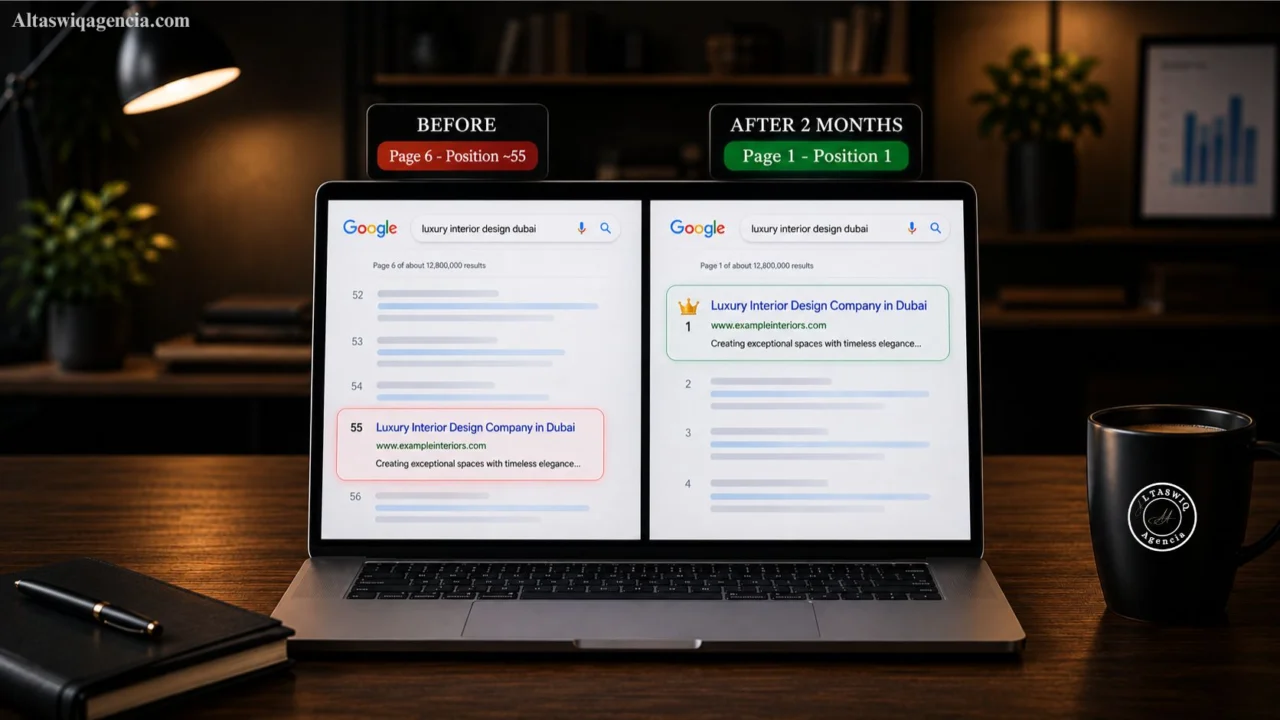
Position 60 to position 1 sounds like a story about content volume. It is not. It is a sequence, and the order matters more than the effort — this is the same 90-day process behind the ecommerce engagement that produced 4.1× revenue in eleven months.
Days 1–14: find what is capping you
Before writing anything, we establish why the page cannot rank: crawl and index problems, thin or duplicated content, missing internal links, or an authority gap against the three competitors currently holding the positions. Most stalled pages are held back by something structural, not by their word count.
Days 15–30: clear the foundations
Speed, crawlability, canonical tags, schema. Unglamorous work that unlocks everything after it — and the reason a page can jump ten positions before a single new sentence is published.
Days 31–60: rebuild the page around the query
Not longer — closer. Match the intent precisely, answer the actual question in the first screen, add the comparison or data the top results are missing, and link to it properly from your strongest existing pages. Internal linking is the most underused lever in SEO.
Page one is won by relevance and authority. In that order.
Days 61–90: earn the authority
Digital PR and genuine mentions on publications your industry already trusts. This is the slowest component and the one that makes positions hold instead of bouncing. Skipping it is why so many pages reach position 8 and stop.
Why the order matters
Publishing before the foundations are fixed wastes the content. Chasing links before the page deserves them wastes the budget. Sequencing is most of the skill, and it is what separates a programme from activity.
What to expect
Meaningful movement in 90 days; page-one positions for competitive terms typically at six to nine months. Anyone promising position one in a month is selling you risk. Read the full case study for the numbers, or get a free audit to see the plan for your own terms.